
Destination
The Quiet Jewel of Asia
Kuala Lumpur is one of those cities that quietly does everything well, without ever shouting about it. It has the futuristic skyline and the famous twin towers, the great shopping and the rooftop bars — but it also has street markets that smell of a dozen cuisines, golden temples and grand mosques within walking distance of each other, and pockets of rainforest that reach right into the city. In a single day you can move between glass towers, a Chinese temple, an Indian quarter, and a Malay food stall, and all of it feels entirely natural. KL doesn’t ask you to choose between modern and traditional, East and East-of-East — it simply layers them together.
The icon, of course, is the Petronas Towers — two silver spires joined by a skybridge, soaring above the city and glowing at night like something from the future. They anchor a modern downtown of malls, parks, and restaurants, with the colonial-era landmarks, the old railway station, and the city mosque not far away. But the real character of Kuala Lumpur is in its mix of peoples. This is a genuinely multicultural city, where Malay, Chinese, and Indian communities have lived side by side for generations, each bringing its own temples, festivals, and above all, food.
And the food may be the best reason to come. KL is one of the great eating cities of Asia, precisely because of that mix: fragrant Malay curries, Chinese noodle stalls, Indian banana-leaf feasts, and the beloved hawker centers where all of it comes together under one roof for a few dollars. Eating here is casual, constant, and endlessly varied — you simply follow the crowds and the aromas, and rarely go wrong.
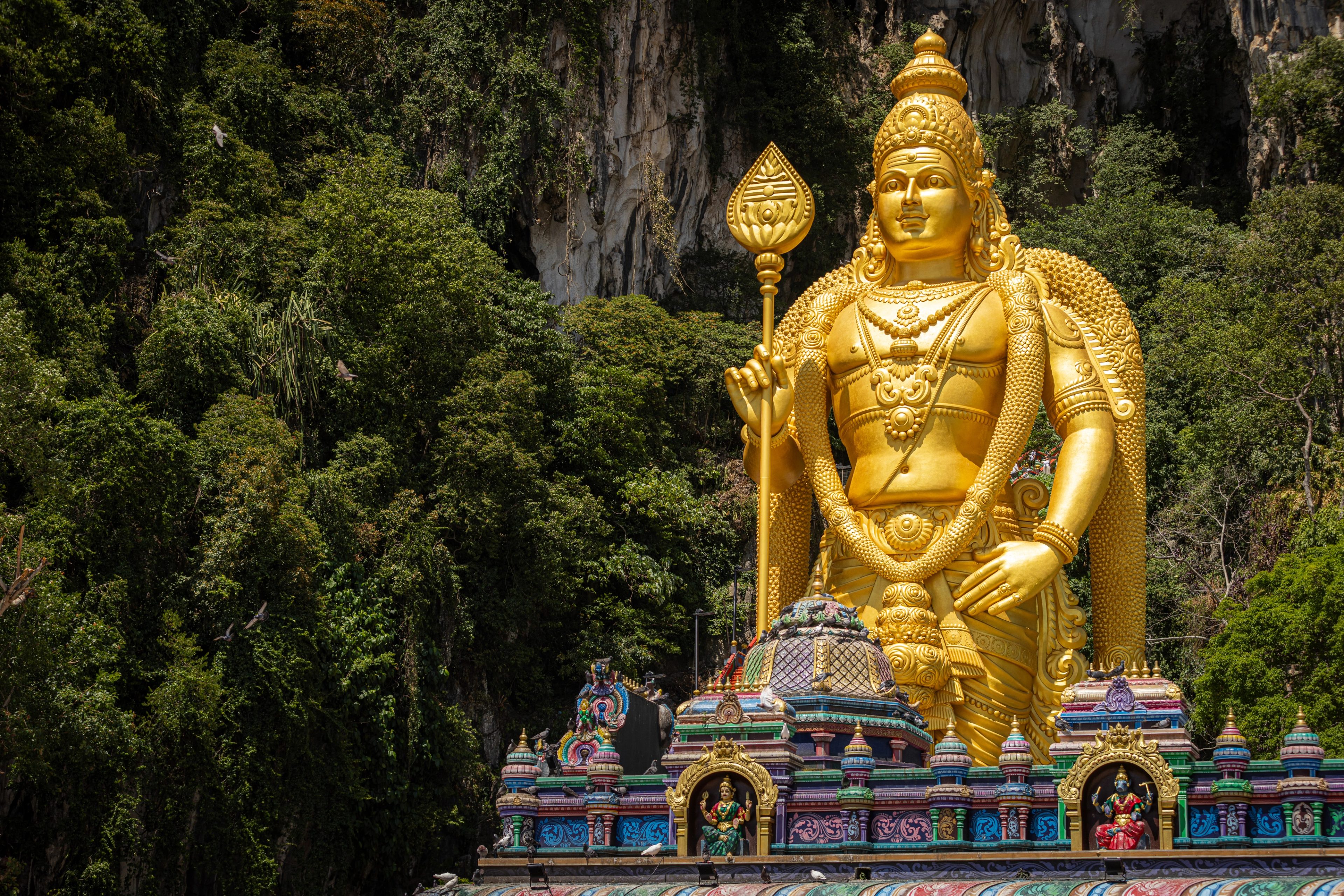
eyond the city, nature is remarkably close. The Batu Caves, a vast limestone cavern with a towering golden statue and a steep climb of colorful steps, sit just outside town. Tea plantations, hill stations, and rainforest are all within reach, and KL makes an easy, well-connected base for exploring the rest of Malaysia and the region. It’s also one of Asia’s most affordable major cities, which makes its comfort and variety go even further.
Kuala Lumpur sits just a few degrees from the equator, so it is warm and humid year-round, with short tropical downpours possible any time. The drier, slightly more comfortable months run from May to July and December to February, but the weather rarely dictates a visit here.
Kuala Lumpur is often passed through on the way somewhere else — and those who stop are always glad they did. It’s easy, welcoming, and wonderfully diverse, a city that rewards curiosity with one of the richest cultural and culinary mixes anywhere in Asia.