
Destination
The Atlantic Kept Its Secret
Portugal sits at the edge of Europe the way a poet sits at the edge of a conversation — quiet, observant, and somehow saying the most. This is a country of soft melancholy and sudden brilliance: fado drifting from a window in Alfama, gold light on the Douro at harvest, an Atlantic that has been pulling navigators and dreamers toward the horizon for six hundred years. Portugal has never needed to announce itself. Those who know, know.
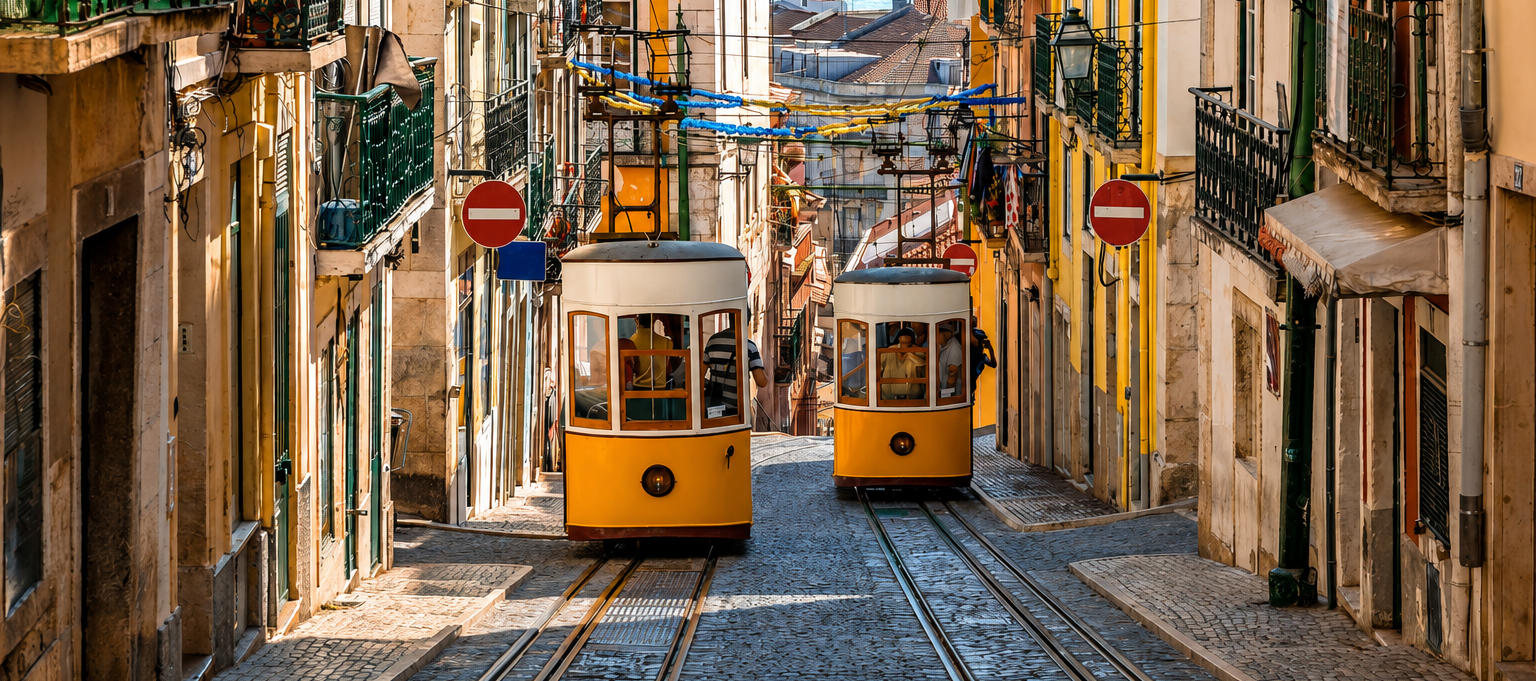
It is a country best understood slowly. Lisbon asks for wandering more than sightseeing — trams rattling up impossible hills, tiled façades catching the afternoon sun, miradouros where the whole city arranges itself below you at golden hour. A capital that somehow still feels like a well-kept neighborhood, where the pastry is warm and nobody is watching the clock.
Then the country deepens. In the Douro Valley, terraced vineyards fold into the river like an amphitheater built for wine, and there are quintas where the winemaker pours from barrels that never see export — where the finest amenity is the silence. Sintra hides fairytale palaces in its misty hills, and just beyond, the continent simply ends at Cabo da Roca, dramatic and final. In the north, Porto glows with granite and grace, the Ribeira turning amber at dusk while the port lodges across the river hold a century of patience in their cellars. And to the south, the Algarve keeps its refinements quiet: hidden coves, clifftop tables, golf mornings that dissolve into long Atlantic afternoons.
May through October carries the classic Portuguese light, though September in the Douro — harvest season — is its own argument. Lisbon in winter is mild, unhurried, and quietly perfect.
Portugal doesn't compete for your attention. It simply waits — and it is always worth returning to a place that waits so beautifully.